Interview with
Ricki Stern & Annie Sundberg
Writers and Directors of the TV Series Surviving Jeffrey Epstein (2020)
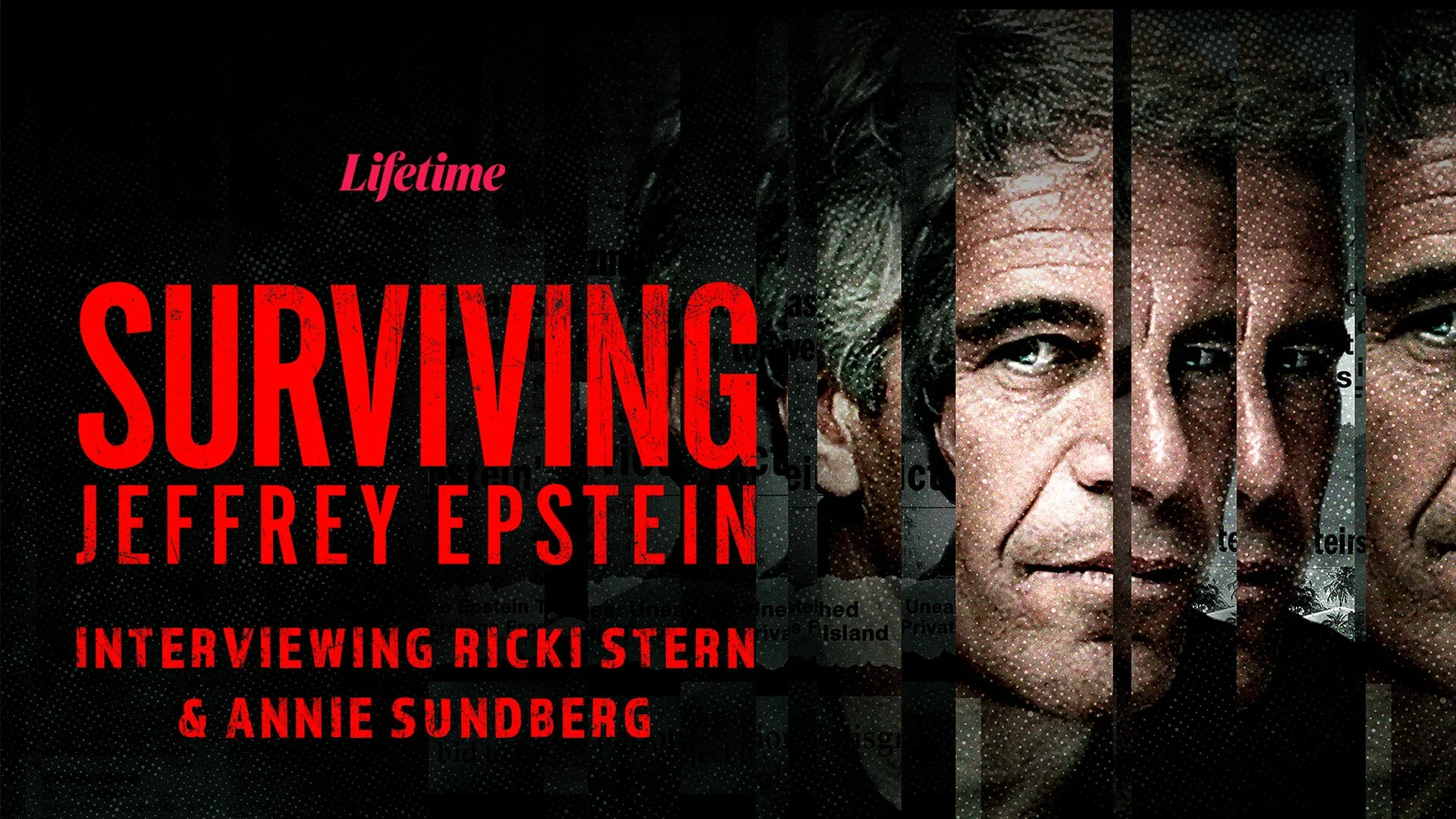
After becoming fascinated with the Epstein scandal, his suspicious death, Maxwell being arrested, and the controversial figures involved in the corruption, watching both the Netflix Original Series, Epstein: Filthy Rich (2020) and Lifetime’s Surviving Jefferey Epstein (2020) was always going to be a no brainer for me when they were released just months apart. However, although both are exceptionally well made and are shedding light on such important events, it was the creators of Lifetime's series that I wanted to talk to about their journey making this important documentary. I know the Lifetime series is most likely harder to get hold of here in the U.K. but even watching the Netflix series linked above is still worth your time in understanding what his victims went through. Surviving Jefferey Epstein (2020)is available on demand on Sky and Stern/Sundberg’s latest series Surviving Death (2021) is out this week on Netflix!
All images and rights to them are owned by Showtime and not my own. I have modified this poster slightly, please don’t sue me Showtime

(BP) Listening to the victims tell their stories is very emotional and moving, what steps did you do to build that relationship with each of the victims to make them feel comfortable enough to open up?
(RS) We spoke to many of the survivors and their lawyers on the phone and via Zoom before they agreed to be interviewed. Through those conversations, we learned what their concerns were and what they were hoping they would achieve by being interviewed for the series. For many of the women they wanted an opportunity to share their full stories without focusing on the nature of the abuse. It was important to them that they could share their stories in a way to help other people who have suffered sexual abuse and to possibly prevent others from falling prey to some of the grooming techniques employed by Jeffrey Epstein and Ghislaine Maxwell.
(AS) For a series like this, as Ricki points out, there’s a significant amount of time invested before cameras are ever introduced. There are rounds of requests, phone calls, conversations that need to happen/. Working first with the women’s lawyers we were very clear regarding our intent with this series, which I believe helped to gain both the lawyers' and the survivors’ trust. We had seen the immediate coverage in the wake of Epstein’s death (in August 2019). The focus was primarily on Jeffery Epstein, who he was and what his circles were, while the survivors’ experiences were grouped together and the women were often presented as a chorus. It was our goal to give these women voice as individuals, and each woman’s experience in this series adds to the larger understanding of Epstein’s methods of manipulation and abuse.
(BP) Epstein was found dead in his cell in August last year. I remember reading the news and feeling angered by his somewhat escape from the trauma he’d caused to his victims. What was it like learning this news whilst working on the project and what effects did it have on the series?
(RS) It was shocking to learn that JE, who had previously attempted to take his life, was able to succeed at a second attempt. In some ways it made the series more urgent because it was an opportunity for women to make their stories public. It was an opportunity that they would not get in the court of law.
(AS) I agree with Ricki in that Epstein’s death gave this series urgency. And as far as impact on the series, it certainly freed us up to focus more fully on the women survivors. Epstein’s death was the end of this story. Now it’s about the women, what is owed to each of them, and what can be done to support others have and are being abused.
There have been many theories about Epstein’s psychology and how he died, but one of the conversations we had during the research stages of the series still resonates; someone involved with the initial Palm Beach investigation into Epstein felt strongly that he likely paid off people to help him commit suicide. That he wasn’t brave enough to make it through what the rest of his life held out for him. It’s an outrage that he really did get away with everything he did - there was no responsibility, no remorse - when the women we came to know are each grappling and struggling with the fall out from his abuse.
(BP) The multimillion-dollar townhouse in New York was rigged with cameras all over the place. Assuming that the archive of footage was recovered by the FBI, are you surprised nothing has come of this so far? You’d imagine there’s a lot of incriminating evidence implicating others from there.
(RS) I am not surprised that material has not yet surfaced. I think until we have a federal case go to court potential evidence will be held by the federal prosecutors. We just have to wait for the case against Ghislaine.
(BP) Throughout your career, you have worked on various projects undertaking many different roles, is there any project you’ve worked on that stands out as your favourite?
(RS) I love working on in-depth documentaries. They always take me down unexpected paths. Filming The Trials of Darryl Hunt over 13 years was a rollercoaster but in the end have the opportunity and the privilege to tell Darryl’s story of his wrongful conviction and then getting to know him upon his release is probably the most meaningful film and experience of my career. I also loved filming with Joan Rivers. Spending a year chasing after Joan - without a distributer or even any interest in her story - was daunting but it proves to me that if something is too easy maybe it is not worth making.
(BP) Thank you so much both of you for taking the time to discuss Surviving: JE (2020), and your careers with me, I’m a huge fan as I told you. Are you working on any exciting upcoming projects you can share with me at the moment?
(RS) Thank you! My newest series Surviving Death (2021) begins streaming on Netflix January 6th. Annie and I are working on an HBO documentary about high school pressures and higher education - we have been navigating Covid-19 for this film and as the world struggles with the changing protocol, we are also adapting daily.
(AS) I am right there with Ricki; The Trials of Darryl Hunt (2006) is the film that stands out as my favourite; it was a hard journey to make that film, but in the end it felt that the film helped to shift awareness of race and criminal justice in American. I’m mostly grateful for the relationships that came out of the process of making that film: Darryl, his attorney Mark Rabil, and journalist Phoebe Zerwick are all remarkable individuals who have left their mark on me.
Knuckleball (2012)! was in many ways the most fun we’ve had making a film; we travelled through a Major League Baseball season with some excellent oddball heroes, several of whom are gone now (Jim Bouton died in 2019 and more recently we just lost Phil Niekro). There is no longer a knuckleballer in the major leagues, and I am thankful we were able to capture these pitchers and their stories.
(BP) The unwanted arrival of Covid-19 must’ve caused all sorts of problems for the production towards the start of the year, how did you manage to work around this challenge and use it to your benefit?
(RS) Covid-19 made things very challenging. We were shut down for about a month while we researched ways we could film remotely. We tried several techniques - shipping equipment to women, filming via their computers, filming in a sanitized studio with a green screen and ultimately using local small crews to film while we conducted the interviews over a zoom or FaceTime. We were monitoring our editors cuts via links on our computers at home and we finished the colour and sound mixes from our kitchen tables. I would say there was no benefit to Covid-19 - any money we saved in travel we ended up applying to the edit. Figuring out the remote technology added headaches and time to the edit.
(BP) Ghislaine Maxwell was eventually arrested on federal charges in July and was seen as the main recruiter for Epstein’s sexual abuse crimes. How much of an impact did this have on the late stages of production?
(RS) The final episode was being edited when Ghislaine was arrested. We had an emergency meeting and decided to focus more of the final episode on the unfolding news. We filmed the New York hearing with federal prosecutors and Ghislaine then went back to as many survivors as we could to get their reaction to Ghislaine’s arrest. The women were understandably emotional about her arrest and generally hopeful that she would be held accountable for her role in several of their abuse.
(BP) Maxwell, if she stays alive, is harbouring masses of information and likely some very incriminating details from her several years aiding Epstein. Is there a possibility that there could be more episodes in the future that focus down this route?
(RS) I am sure people will pick up Ghislaine’s role in the abuse but we are not working on anything at this point.
(BP) The MeToo movement had a huge impact on victims of abuse around the world, had that not have happened, do you think Epstein's sexual abuse may not have been uncovered for several more years?
(RS) As we explored in the series, the MeToo movement was imperative; it created a climate for women to come forward and to be taken seriously. Prior to this moment, wealthy men like Jeffrey Epstein had been enabled by their powerful friends and suffered little consequence. Young girls and women who spoke out about abuse were devalued and dismissed. The MeToo movement focused a powerful lens on these past abuses and forced us to hold people accountable for their actions - whether directly related to the abuse or by enabling it.
(BP) Bill Clinton and many other high profile members of society are on the flight records numerous times back and forth to Epstein’s island, but, not touched upon very much in the series, is this something you would’ve liked to explore more or deliberately stayed away from?
(RS) The fact that Bill Clinton travelled on Jeffrey Epstein’s plane has been wildly reported but no other claims have been made about him regarding any wrongdoing related to Epstein. Only one survivor shared that she had encountered Bill Clinton on a plane to S. Africa, but she did not accuse him of wrongdoing. We did not avoid naming “high profile members of society” but we were careful to verify and back up claims and reports.